Is Your Cryptocurrency Safe from Quantum Computing Attacks
Cryptocurrency is not completely safe from quantum computing attacks. The growth of quantum technology brings big risks to digital currencies. For example, about 25% of Bitcoins can be attacked. Recent studies show we need to use post-quantum cryptography to protect cryptocurrencies. As quantum computing improves, threats may come sooner than we think. You need to know these risks to keep your assets safe.
Key Takeaways
Quantum computers can break current encryption methods like RSA and ECDSA. This puts your cryptocurrency at risk.
The ‘harvest now, decrypt later’ plan lets attackers collect encrypted data now. They can decrypt it later when quantum technology gets better.
Change to quantum-resistant public-key cryptography. This will protect your wallets and digital signatures from possible attacks.
Use tamper-resistant hardware to keep your private keys safe. This will make your cryptocurrency safer.
Stay updated on the latest news in blockchain security. This helps keep your investments safe.
Quantum Threats
What is Quantum Computing?
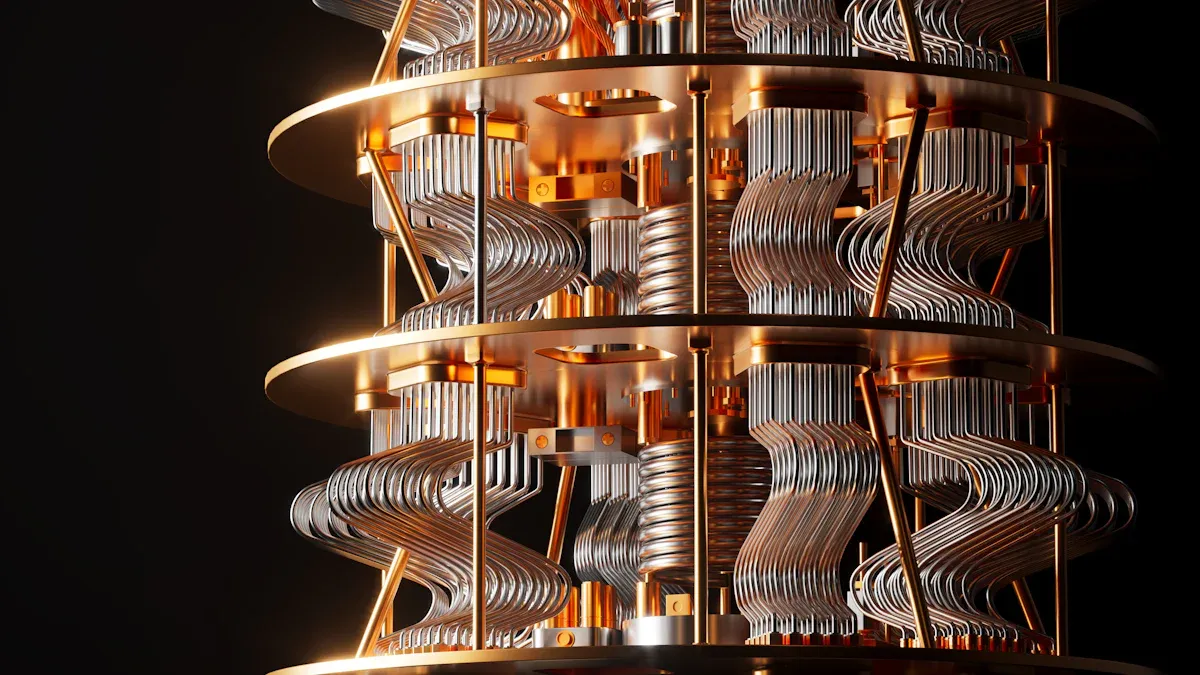
Quantum computing is a big step up from regular computing. Regular computers use bits as the smallest data unit. Quantum computers use qubits instead. Qubits can be in many states at the same time. This lets quantum computers do many calculations at once. This ability makes them much more powerful.
Here’s a quick comparison of classical and quantum computing:
Feature | Classical Computing | Quantum Computing |
|---|---|---|
Basic Unit of Data | Bits (0s and 1s) | Qubits (can be 0, 1, or both at the same time) |
Processing Method | One operation at a time | Many operations at once |
Power Scaling | Grows slowly with more transistors | Grows very fast with more qubits |
Calculation Capacity | N calculations for N bits | 2^N calculations for N qubits |
Key Features | Results are predictable and repeatable | Superposition and entanglement allow complex math |
Implications for Cybersecurity
The growth of quantum computing brings big risks to cybersecurity. Current encryption methods like RSA and ECC depend on hard math problems. Quantum computers can solve these problems much quicker than regular computers. This means they could break the encryption that keeps your online transactions safe.
You should also know about “harvest now, decrypt later.” Attackers can grab encrypted data now and save it. They can decrypt it later when they have quantum power. This shows why we need to switch to post-quantum cryptography. Experts say quantum computers might break current encryption by the early-to-mid 2030s.
As quantum threats grow, you need to stay updated. Think about how secure your cryptocurrency investments are. The cryptocurrency community is working hard to create quantum-resistant technologies. This will help protect digital assets from these new dangers.
Cryptographic Vulnerabilities

Public Key Risks
Public key cryptography is very important for many cryptocurrencies. It uses hard math problems to keep transactions safe. But, quantum computing brings big risks to these systems. Here are some public key algorithms that are weak against quantum attacks:
RSA encryption: Totally weak against Shor’s algorithm. All key lengths, like 1024-bit, 2048-bit, and 4096-bit, are in danger.
Elliptic Curve Cryptography (ECC): Weak and can be broken faster than RSA. This affects many apps, including mobile apps and blockchain.
Diffie-Hellman: Also weak against quantum attacks. This allows attackers to decrypt messages later, especially in protocols like TLS 1.2.
Understanding the math behind these weaknesses is very important. Shor’s algorithm can quickly solve the integer factorization problem, which is key for RSA encryption. This makes RSA very weak against quantum attacks. Also, Shor’s algorithm solves discrete logarithms, which affects ECC and weakens its security. For symmetric cryptography, Grover’s algorithm shortens the effective key length, so longer keys are needed to stay safe.
Digital Signature Integrity
Digital signatures are very important for keeping transactions safe in cryptocurrencies. Most cryptocurrencies, like Bitcoin and Ethereum, use digital signatures based on elliptic curve cryptography. This dependence creates a big weakness against powerful quantum computers. Here are some key points about digital signature weaknesses:
Digital signatures are key for blockchain security. They use public-private key pairs to sign transactions.
Current cryptocurrencies mainly use elliptic-curve methods, like ECDSA and Schnorr. These methods are fast but weak against quantum attacks because they depend on the elliptic-curve discrete logarithm problem.
In a world with quantum computers, miners could use Grover’s algorithm for a big advantage. Current mining is set up for regular computers, so it’s unclear when quantum computers will be better.
As quantum computing gets better, the effects on digital signatures and public key algorithms become more worrying. The cryptocurrency community must focus on creating quantum-safe solutions to protect against these weaknesses.
Harvest Now, Decrypt Later
Future Attack Scenarios
The “harvest now, decrypt later” plan is a big danger for cryptocurrency owners. Cybercriminals can gather encrypted data today. They plan to unlock it later when quantum computers are strong enough. This plan mainly targets important financial details. Experts think that by 2030, regular encryption will not be enough. Here are some possible future attack situations:
Stealing From Wallets: Quantum computers could find secret keys from public keys. This would let attackers take money directly from wallets.
Mining Too Fast: Quantum computers could solve mining puzzles much quicker than regular ways. This would make mining unfair.
Shor’s Algorithm: This algorithm can break public key cryptography. It is a big threat to wallet safety if quantum computers get strong enough.
Grover’s Algorithm: This makes searching for solutions in mining faster. It does not break encryption, but it could speed up mining.
Real-World Implications
The effects of stolen encrypted blockchain data are scary. Once quantum computers are here, they could reveal the private history of Bitcoin and other blockchain networks. This would show previously safe transaction information. The idea of “harvest now, decrypt later” lets enemies gather encrypted data now and unlock it later when quantum tech improves.
Right now, data is being stolen through app and API breaches. Credential abuse often happens with automated bots. Ongoing data theft shows that enemies are taking action. As quantum attacks become more likely, the danger to your cryptocurrency investments grows. You need to stay updated and think about switching to quantum-safe solutions to protect your assets.
Post-Quantum Cryptography
Transitioning to Quantum-Resistant Solutions
As quantum computing gets better, moving to quantum-resistant solutions is very important for keeping cryptocurrencies safe. Current methods like RSA and ECC are at risk from quantum attacks. To keep your assets safe, you need to use new algorithms that can handle these threats.
Some cryptocurrencies have started this change. Here are a few examples:
Quantum Resistant Ledger
IOTA
Cellframe
Abelian
Algorand
Hedera
These projects want to use post-quantum cryptography to make their security stronger against possible quantum risks.
To see the main features of these new algorithms, look at this table:
Algorithm Type | Key Feature |
|---|---|
Lattice-based cryptography | Uses high-dimensional lattice problems, which are hard for quantum attacks because of their complexity. |
Hash-based signatures | Depends on cryptographic hash functions, giving strong security but limits on signature creation. |
Code-based cryptography | Based on error-correcting codes, making it hard for quantum computers to decode. |
Multivariate quadratic equations | Involves complex polynomial relationships, making it tough for quantum computers to solve big systems. |
Challenges in Implementation
Moving to quantum-safe systems has many challenges for the cryptocurrency community. Here are some main problems:
Challenge | Description |
|---|---|
Extensive Updates | Current systems need big updates for new algorithms. |
Complexity of Integration | Adding new algorithms to current systems is hard and takes time. |
Potential Vulnerabilities | New algorithms might have weaknesses we don’t know about yet. |
Supply Chain Coordination | Working together across the supply chain is needed for good implementation. |
Cost Concerns | Moving to post-quantum cryptography could be expensive. |
Urgency of Quantum Threat | We need to deal with the quantum threat quickly before it happens. |
The costs to upgrade to quantum-resistant cryptographic methods can vary a lot based on the organization size:
Small organizations: about $100K – $500K to start the change
Mid-size companies: around $500K – $3M depending on how complex the system is
Large companies: usually $5M – $20M+ over several years
Critical infrastructure operators: could cost tens of millions
U.S. federal government estimates: over $7 billion for civilian systems changes in the next ten years.
Changing from classical to post-quantum cryptographic systems needs careful planning and integration. Current infrastructures rely heavily on classical algorithms, causing big compatibility issues. You should keep up with the latest news on quantum readiness to make sure your investments stay safe.
Quantum computing brings big dangers to cryptocurrency safety. Here are the main threats you need to know:
Quantum computers can break public-key methods like RSA and ECDSA. These methods keep your transactions safe.
The ‘harvest now, decrypt later’ plan lets attackers save encrypted data for later unlocking.
To keep your assets safe, think about these smart steps:
Use quantum-resistant public-key cryptography to protect wallets and digital signatures.
Get tamper-resistant hardware to keep private keys safe.
Improve blockchain security to stop unauthorized transactions.
Take action now to make sure your cryptocurrency investments stay safe from possible quantum dangers.
FAQ
What is quantum computing’s impact on cryptocurrency?
Quantum computing can break the encryption used in cryptocurrencies. This creates risks for your digital assets. Attackers could take advantage of weaknesses in public key cryptography.
How can I protect my cryptocurrency from quantum threats?
You can protect your cryptocurrency by using quantum-resistant cryptographic methods. Think about using hardware wallets and keep up with updates in blockchain security.
When will quantum computers be able to break current encryption?
Experts think that quantum computers might break current encryption methods by the early-to-mid 2030s. This shows why we need to switch to quantum-safe solutions quickly.
What is “harvest now, decrypt later”?
“Harvest now, decrypt later” means attackers collect encrypted data today. They plan to unlock it later when quantum computers are strong enough to break the encryption.
Are there cryptocurrencies already using post-quantum cryptography?
Yes, some cryptocurrencies like Quantum Resistant Ledger and IOTA are using post-quantum cryptography. These projects want to make security stronger against possible quantum threats.